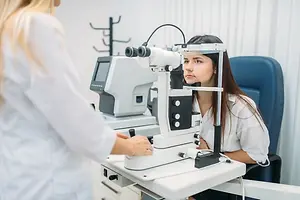
Myopia Management in Cranbrook, BC
We provide myopia management using glasses or contact lenses, with recommendations based on your child's vision, eye health, visual demands, and needs.


Myopia Changes as Your Child Grows
Myopia makes distant objects appear blurry while near vision may remain clearer. For some children, the amount of nearsightedness changes over time as they grow, and because myopia tends to progress faster during childhood, acting early gives us the best opportunity to monitor changes and adjust recommendations as needed.
Regular eye exams allow us to track those changes, review your child's prescription, and discuss whether myopia management may be appropriate. Our goal is to help you understand how your child's vision is changing and what the next step should be.
Signs of Nearsightedness in Children
Children may not always recognize that their distance vision has changed. Parents may notice signs such as:
- Squinting to see distant objects
- Sitting closer to screens or the classroom board
- Complaining that faraway objects look blurry
- Difficulty recognizing signs or details at a distance
- Frequent changes in a glasses prescription
These signs do not always mean your child has myopia, but they are a good reason to schedule a pediatric eye exam.
Myopia Management Is an Ongoing Process, Not a One-Time Fix
Myopia management is not only about helping your child see clearly today. It also involves monitoring how their vision changes over time and adjusting recommendations as their needs develop.
Your child's care begins with a thorough evaluation of their vision and prescription. We then discuss the options that may be appropriate based on their age, eye health, lifestyle, and visual needs.
Because every child is different, myopia management should be individualized rather than based on a single approach.
Glasses may form part of your child's myopia management plan. We will review their prescription and visual needs before recommending eyewear that supports clear, comfortable vision.
If glasses are recommended, our optical team can help your family choose eyewear that fits comfortably and suits your child's daily routine.
Contact lenses may also be considered as part of a myopia management plan for some children. Suitability depends on your child's individual vision, eye health, and ability to wear contact lenses comfortably.
A contact lens exam allows us to evaluate fit, comfort, and visual needs before making a recommendation.
Myopia management is an ongoing process.
Follow-up care allows us to monitor changes in your child's vision, review how their current correction is working, and adjust recommendations when needed. Follow-up visits are typically scheduled every 6 to 12 months, though your optometrist may recommend more frequent check-ins depending on your child's rate of progression and individual needs.
The goal is to keep your child's care aligned with their changing vision as they grow, rather than applying a one-size-fits-all schedule.
Helping Parents Understand the Plan
Parents should understand why a recommendation is being made before deciding how to move forward.
We take the time to explain your child's prescription, review the available options, answer your questions, and discuss what each approach may involve. That allows your family to make an informed decision based on your child's needs and everyday routine.
Clear communication is an important part of every myopia management plan.
Myopia Management Starts with a Pediatric Eye Exam
If you are concerned about your child's distance vision or have noticed changes in their prescription, a pediatric eye exam is a great place to start.
Your optometrist will evaluate your child's vision, review any changes, and determine whether myopia management should be considered.
If your child's prescription has changed at their last two or three eye exams, their myopia may be progressing. Regular monitoring lets us track the rate of change and decide whether management is needed.
Myopia cannot be reversed, but its progression can often be slowed. Early monitoring and the right management approach, whether glasses or contact lenses, give your child the best chance of stable vision as they grow.
Both glasses and contact lenses can be used to manage myopia in children. The right choice depends on your child's age, prescription, lifestyle, and whether they are comfortable wearing contact lenses. Your optometrist will discuss which option suits your child best.
Myopia tends to progress faster during the years children are growing, typically between ages 6 and 14. Once growth slows, progression usually stabilizes. This is why early action and regular monitoring during those years matter most.
Support Your Child's Vision as They Grow
Myopia can change throughout childhood, but you do not have to navigate those changes without guidance.
Our eye clinic is here to monitor your child's vision, explain the options available, and recommend a myopia management plan based on their individual needs.